
Exploring names for hell in the bible helps readers understand how ancient Hebrew and Greek scriptures describe the underworld and final judgment. The English word “hell” translates several distinct biblical terms, each carrying a unique historical meaning.
Scriptures use different titles like Sheol, Gehenna, and Hades to detail places of the dead or divine punishment. Studying these original words reveals deeper insights into biblical teachings regarding afterlife concepts.
This study guide examines every biblical title, root term, and description used across Old and New Testaments clearly.
| Biblical Term | Testament / Language | Primary Biblical Meaning |
| Sheol | Old Testament / Hebrew | The silent realm of all departed souls |
| Gehenna | New Testament / Greek | The valley of fire, final place of judgment |
| Hades | New Testament / Greek | The temporary abode of deceased spirits |
| Tartarus | New Testament / Greek | Gloomy abyss holding fallen angels |
| Lake of Fire | New Testament / Revelation | Eternal destination of judgment |
Key Takeaways
- Four primary original words are translated as hell in English Bibles: Sheol, Hades, Gehenna, and Tartarus.
- Old Testament verses focus mostly on Sheol, describing it as the grave or underworld realm.
- New Testament passages introduce Gehenna to portray final fiery judgment and spiritual separation.
- Distinct biblical terms carry specific cultural histories that clarify ancient scriptures.
7 names of hell
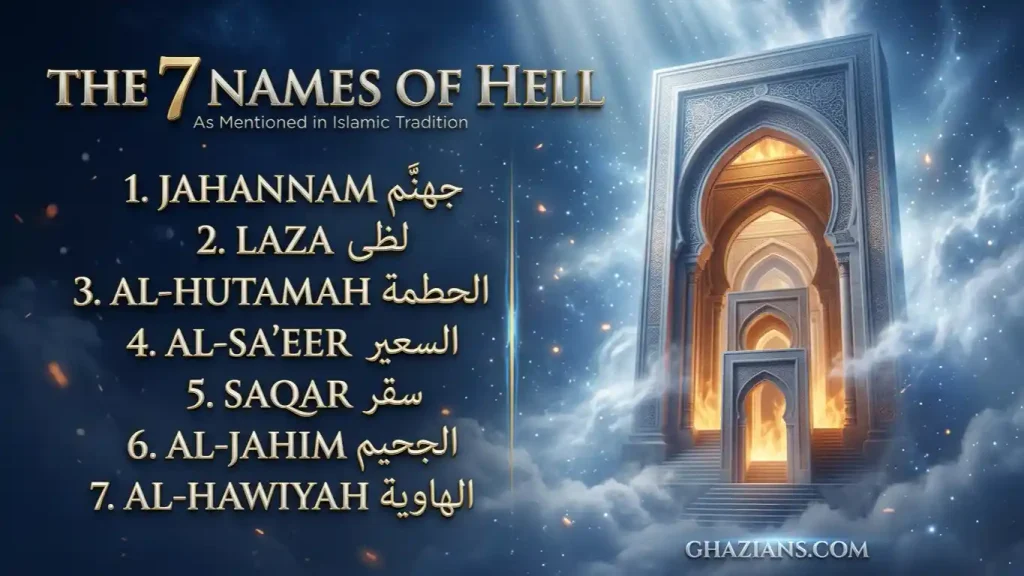
Scriptures use seven primary titles to reference the realm of the dead or ultimate judgment. Understanding each term illuminates biblical theology regarding the afterlife.
| Item Name | Origin & Meaning / Description | Best Suited For |
| Sheol | Hebrew / Underworld or abode of dead souls | Old Testament grave descriptions |
| Gehenna | Greek from Hebrew / Valley of Hinnom fire | Jesus teaching final judgment |
| Hades | Greek / Invisible realm of departed spirits | New Testament intermediate state |
| Tartarus | Greek / Dark subterranean dungeon for angels | 2 Peter angel imprisonment |
| Lake of Fire | English translation / Fiery sea of judgment | Revelation final condemnation |
| Abyss | Greek / Bottomless pit or deep chasm | Revelation prison of demonic spirits |
| Outer Darkness | English expression / Place away from light | Matthew parables on exclusion |
| Pit | Hebrew / Deep hole or grave location | Old Testament poetic descriptions |
| Second Death | English translation / Spiritual final separation | Revelation eternal judgment study |
| Place of Torment | English phrase / Location of suffering | Luke rich man parable study |
| Everlasting Fire | English expression / Unquenchable judgment flame | Matthew divine separation focus |
| Furnace of Fire | English phrase / Blazing location of divine wrath | Gospel parable explanations |
description of hell in the bible revelation
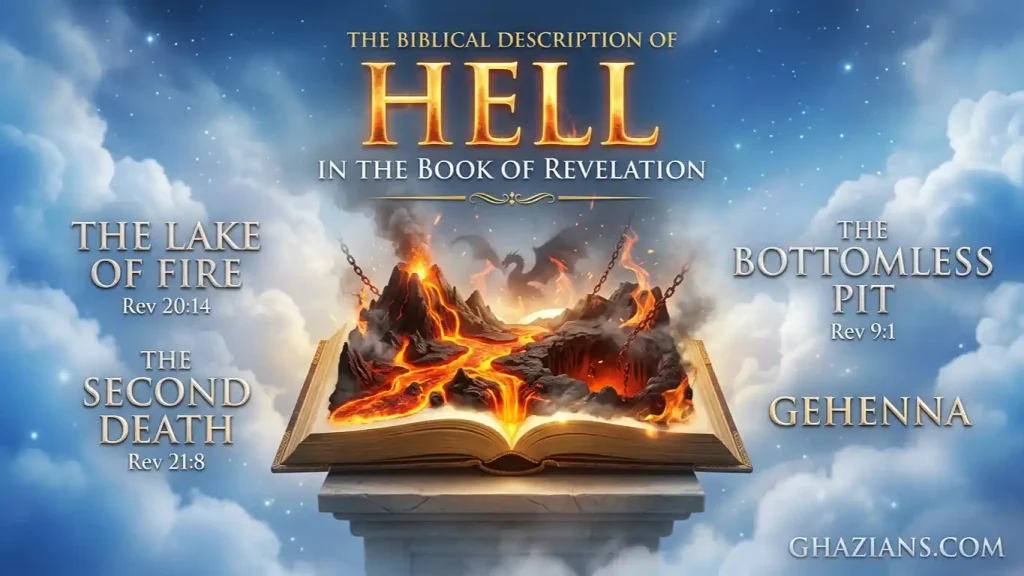
The Book of Revelation offers vivid apocalyptic descriptions of final judgment. Apostle John describes the ultimate destiny of evil using intense, symbolic imagery.
| Item Name | Origin & Meaning / Description | Best Suited For |
| Lake of Fire | Revelation 20:14 / Sea burning with sulfur | Final cosmic judgment study |
| Bottomless Pit | Revelation 9:1 / Deep shaft holding evil forces | Apocalyptic demonic prison study |
| Brimstone Sea | Revelation 19:20 / Burning yellow mineral lake | Unholy trinity defeat study |
| Second Death | Revelation 21:8 / Permanent spiritual death | Complete separation from God |
| Smoke of Torment | Revelation 14:11 / Rising evidence of judgment | Eternal consequence studies |
| No Rest Day or Night | Revelation 14:11 / Unceasing spiritual distress | Apocalyptic warning analysis |
| Great Winepress | Revelation 14:19 / Symbol of divine anger | Judgment of earthly evil |
| Chasm of Darkness | Revelation 16:10 / Total absence of light | Kingdom of darkness studies |
| Tormenting Lake | Revelation 20:10 / Burning place for the dragon | Defeat of Satan analysis |
| Fiery Pool | Revelation 20:15 / Destiny for unwritten names | Book of life teachings |
| Shut Door Realm | Revelation 22:15 / Outside holy city gates | Exclusion from life studies |
| Wrath Realm | Revelation 19:15 / Location of divine justice | Apocalyptic justice themes |
how many times is hell mentioned in the bible
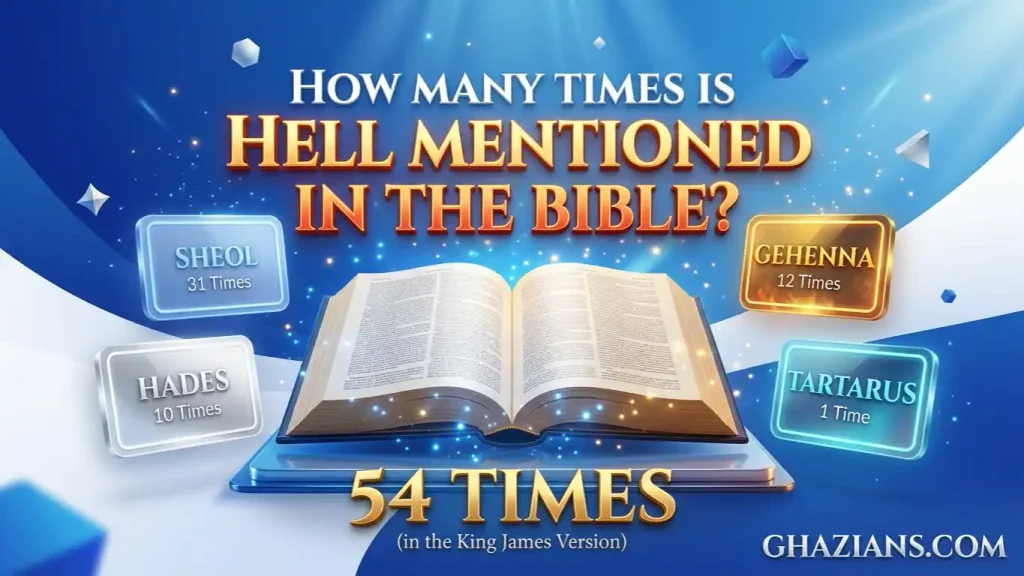
Translators record the word “hell” with varying frequency depending on English Bible versions. Counting occurrences depends heavily on which original Greek or Hebrew text is translated.
| Item Name | Origin & Meaning / Description | Best Suited For |
| KJV Translation | King James / Mentioned 54 times total | Classic English Bible study |
| NKJV Translation | New King James / Mentioned 32 times total | Modern traditional reader study |
| NIV Translation | New International / Mentioned 13 times total | Dynamic equivalent Bible study |
| ESV Translation | English Standard / Mentioned 14 times total | Word-for-word translation study |
| NASB Translation | New American Standard / Mentioned 13 times | Literal translation analysis |
| Sheol Count | Hebrew OT / Occurs 65 times in Hebrew | Old Testament original word study |
| Hades Count | Greek NT / Occurs 10 times in Greek | New Testament word frequency |
| Gehenna Count | Greek NT / Occurs 12 times in Greek | Gospel warning frequency study |
| Tartarus Count | Greek NT / Occurs 1 time in 2 Peter | Unique word count analysis |
| NLT Translation | New Living / Mentioned 13 times total | Thought-for-thought study |
| Geneva Bible | Historical 1560 / Mentioned 54 times | Reformation translation research |
| Douay-Rheims | Catholic 1609 / Mentioned 78 times | Traditional Catholic Bible study |
description of hell in the bible revelation
The King James Version uses classic English phrasing to depict the realm of punishment. Powerful early English terms highlight themes of destruction, fire, and darkness.
| Item Name | Origin & Meaning / Description | Best Suited For |
| Wailing and Gnashing | Matthew 13:42 / Expressing deep regret | KJV gospel parable analysis |
| Unquenchable Fire | Mark 9:43 / Flames that never go out | Mark warning passage study |
| Everlasting Punishment | Matthew 25:46 / Enduring divine sentence | Final sheep and goats parable |
| Outer Darkness | Matthew 22:13 / Realm removed from feast | Exclusion from kingdom study |
| Damnation of Hell | Matthew 23:33 / Pharisee warning phrase | Prophetic warning analysis |
| Fiery Furnace | Matthew 13:50 / Place of blazing heat | End of age judgment lessons |
| Fire and Brimstone | Psalm 11:6 / Burning sulfur imagery | Traditional divine justice study |
| Lowermost Hell | Deuteronomy 32:22 / Deepest subterranean realm | Mosaic warning song study |
| Sorrows of Hell | Psalm 18:5 / Snares of death and grave | Davidic poetic distress study |
| Pains of Hell | Psalm 116:3 / Anguish of mortal peril | Old Testament Psalm analysis |
| Lake of Fire | Revelation 20:14 / Eternal burning destination | Revelation KJV phrase study |
| Devouring Fire | Isaiah 33:14 / God’s consuming holiness | Isaiah prophetic warning study |
is hell mentioned in the bible old testament
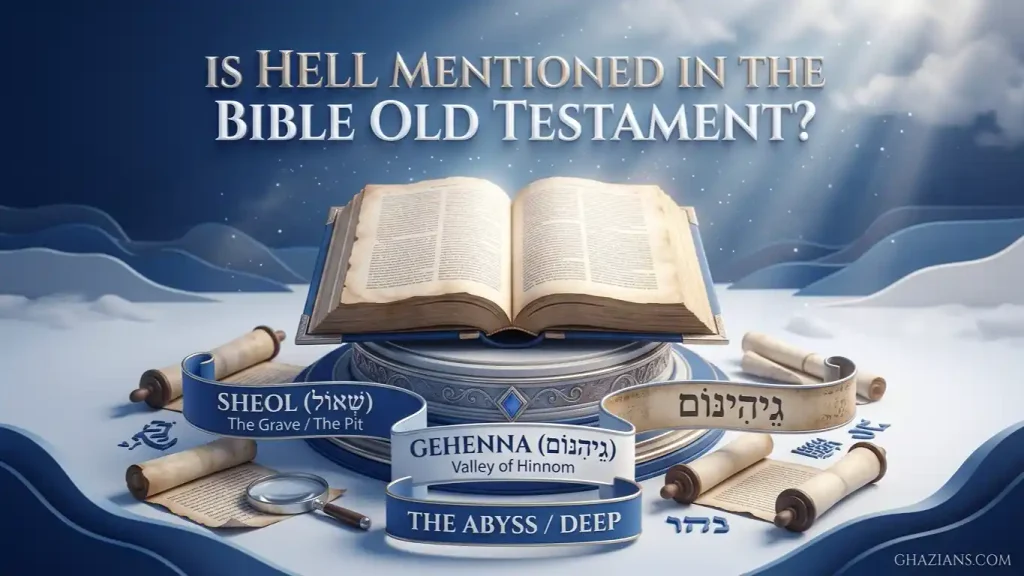
Old Testament writers describe the afterlife using the Hebrew concept of Sheol. Ancient Israelite scriptures focus primarily on the silent grave rather than eternal fiery torment.
| Item Name | Origin & Meaning / Description | Best Suited For |
| Sheol | Hebrew / Common grave of all mankind | Hebrew Bible afterlife research |
| The Pit (Bor) | Hebrew / Underground hole or cistern | Psalms and Isaiah studies |
| Abaddon | Hebrew / Means destruction or ruin | Job and Proverbs wisdom books |
| Land of Forgetfulness | Psalm 88:12 / Realm where dead rest | Poetic Old Testament reflection |
| Place of Silence | Psalm 115:17 / Quiet realm of deceased | Hebrew poetic death research |
| Dust of the Earth | Genesis 3:19 / Return to basic elements | Creation and mortality study |
| Valley of Hinnom | Joshua 15:8 / Historical physical valley | Geographic root of Gehenna |
| Lowest Sheol | Deuteronomy 32:22 / Deepest underground point | Pentateuch judgment warning |
| Land of Darkness | Job 10:21 / Realm without sun light | Job philosophical reflection |
| Bars of the Pit | Job 17:16 / Prison gates of death | Ancient Hebrew poetic imagery |
| Shadow of Death | Psalm 23:4 / Dark valley of mortality | Classic comforting Psalm study |
| Rephaim Realm | Hebrew / Abode of departed spirits | Isaiah prophetic text research |
original word for hell in the bible
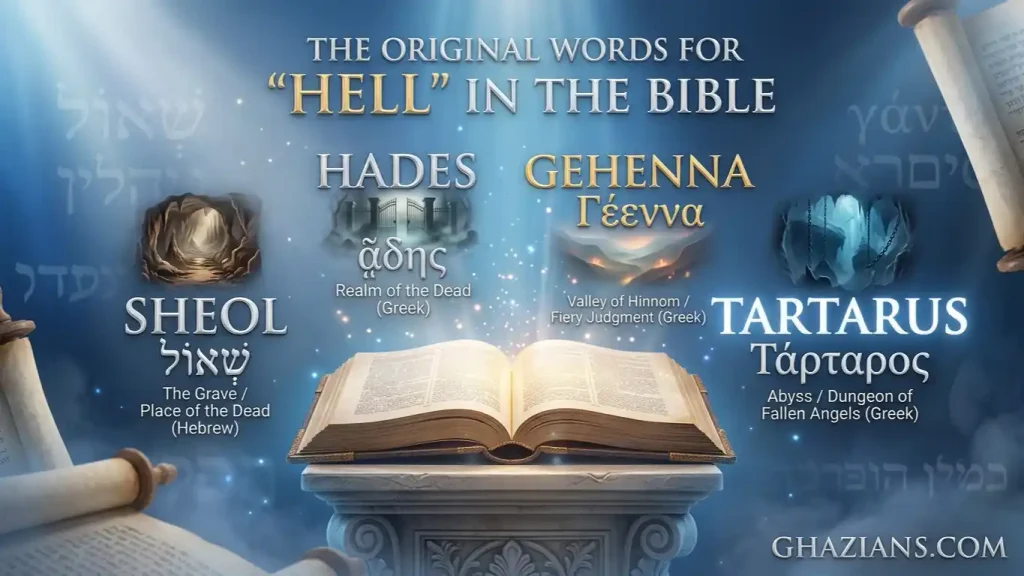
Scriptures rely on distinct original language terms that modern Bibles translate as hell. Identifying Greek and Hebrew roots prevents confusing separate theological concepts.
| Item Name | Origin & Meaning / Description | Best Suited For |
| Sheol | Hebrew / Underworld dwelling of dead | Old Testament word study |
| Gehenna | Greek / Valley of Hinnom garbage dump | Gospel teachings of Jesus |
| Hades | Greek / Unseen world of dead spirits | New Testament Greek translation |
| Tartarus | Greek / Subterranean angel prison | 2 Peter epistle study |
| Gai Ben-Hinnom | Hebrew / Valley of Hinnom’s sons | Historical geography study |
| Abaddon | Hebrew / Place of ruin or destruction | Wisdom literature vocabulary |
| Shahath | Hebrew / Pit, ditch, or corruption | Old Testament poetic study |
| Limne tou Pyros | Greek / Lake of burning fire | Revelation Greek phrase study |
| To Skotos To Exoteron | Greek / The outer darkness | Gospel of Matthew Greek study |
| Phrear tes Abyssou | Greek / Pit of the bottomless abyss | Revelation apocalyptic terms |
| Geenna tou Pyros | Greek / Gehenna of fire | Matthew warning text research |
| Aides | Ancient Greek / Unseen underworld god/place | Homeric and biblical Greek |
is hell mentioned in the bible new testament
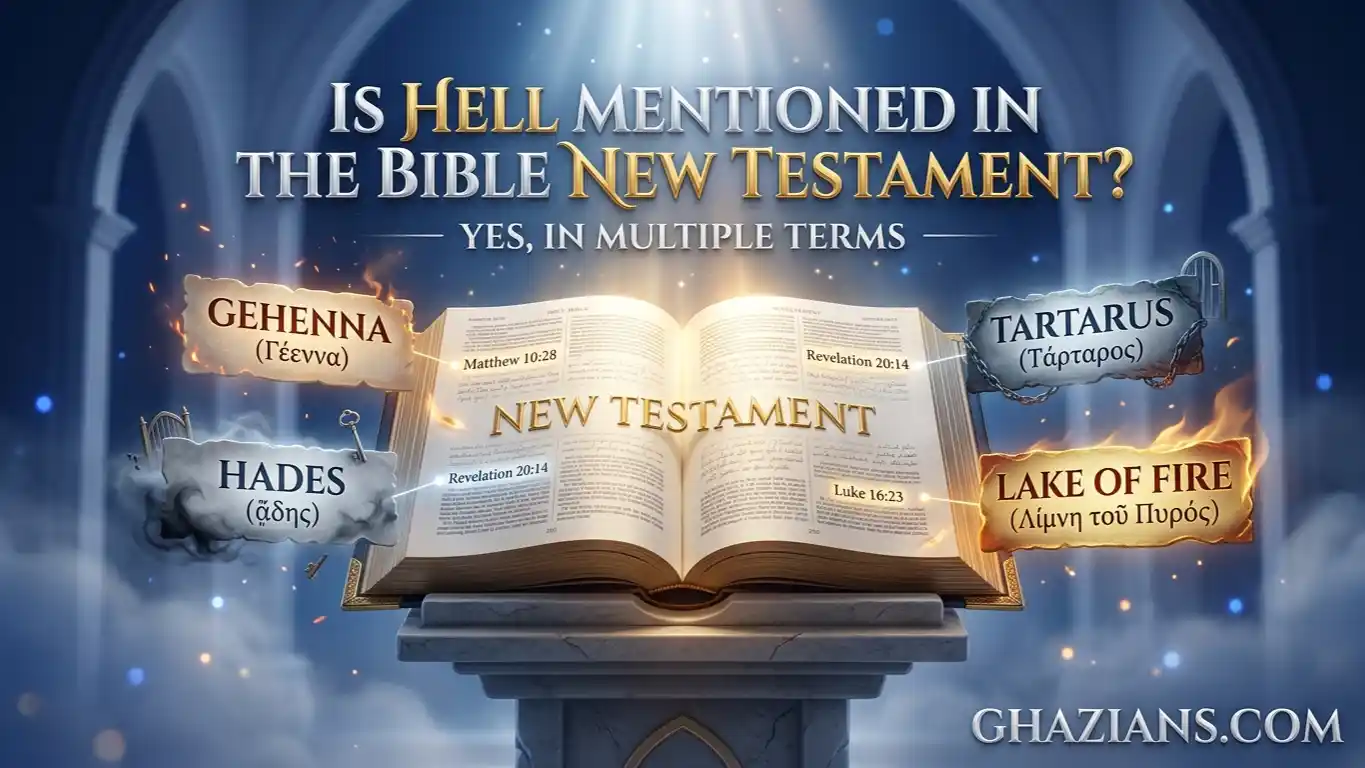
New Testament authors present clearer teachings on judgment, heaven, and eternal separation. Jesus and his apostles use vivid terms to warn listeners about spiritual choices.
| Item Name | Origin & Meaning / Description | Best Suited For |
| Gehenna | Synoptic Gospels / Fiery destruction valley | Jesus warning discourse study |
| Hades | Gospels & Acts / Realm of departed souls | Intermediate state theology |
| Tartarus | 2 Peter 2:4 / Dark dungeon for angels | Apostasy warning epistle study |
| Lake of Fire | Revelation / Ultimate place of punishment | Eschatology end times research |
| Outer Darkness | Matthew / Exclusion from royal feast | Kingdom parable research |
| Furnace of Fire | Matthew 13:42 / Anguish of wicked wheat | Parable of tares analysis |
| Everlasting Fire | Matthew 25:41 / Prepared for the devil | Final separation teachings |
| Eternal Punishment | Matthew 25:46 / Duration of final sentence | Divine justice discourse |
| Chains of Darkness | 2 Peter & Jude / Binding of evil spirits | Epistle warning comparisons |
| Blackness of Darkness | Jude 1:13 / Eternal wandering for false teachers | Jude epistle analysis |
| Eternal Fire | Jude 1:7 / Sodom judgment comparison | Historical warning lessons |
| Second Death | Revelation 20:6 / Final spiritual separation | Apocalyptic victor promises |
is hades hell in the bible
Hades represents the temporary underworld rather than the final lake of fire. Examining Hades clarifies how early Christians understood the intermediate state of souls.
| Item Name | Origin & Meaning / Description | Best Suited For |
| Hades Realm | Greek / Unseen temporary holding place | Intermediate state studies |
| Sheol Equivalent | Septuagint / Greek translation of Sheol | Greek Old Testament research |
| Rich Man’s Abode | Luke 16:23 / Place of temporary anguish | Luke parable context study |
| Abraham’s Bosom | Luke 16:22 / Paradise side of Hades | Comfort for righteous dead |
| Keys of Hades | Revelation 1:18 / Christ’s authority over death | Resurrection authority study |
| Gates of Hades | Matthew 16:18 / Powers of death defeated | Church building foundation |
| Hades Cast Out | Revelation 20:14 / Destroyed in lake of fire | Final end of death study |
| Underworld Prison | 1 Peter 3:19 / Realm visited by Christ | Post-crucifixion theology |
| Temporary State | Theological term / Waiting area before judgment | Systematic theology research |
| Death’s Companion | Revelation 6:8 / Personified rider with death | Apocalyptic rider analysis |
| Inverted Abyss | Greek concept / Realm below living earth | Ancient worldview research |
| Intermediate Realm | Pastoral phrase / Holding area for souls | Eschatological framework |
Biblical Terms for the Nether World
Ancient scriptures use various descriptive titles to portray subterranean realms. These terms emphasize distance from divine light and life.
| Item Name | Origin & Meaning / Description | Best Suited For |
| The Abyss | Greek / Bottomless depth or chasm | Revelation beast origin study |
| Nether World | English phrase / World beneath the earth | Old Testament poetic study |
| Chamber of Death | Proverbs 7:27 / Rooms leading to Sheol | Wisdom warning analysis |
| Depths of Sheol | Proverbs 9:18 / Lowest point of underworld | Moral instruction studies |
| Land of Darkness | Job 10:21 / Realm of shadows and night | Wisdom literature research |
| Land of Forgetfulness | Psalm 88:12 / Memory-less underworld | Hebrew lament Psalm study |
| Pit of Destruction | Psalm 55:23 / Ditch of moral ruin | Davidic prayer analysis |
| Subterranean Prison | 1 Peter / Holding place for spirits | Biblical cosmology studies |
| Realm of the Dead | English phrase / Common graveyard region | General biblical overview |
| Dungeon of Darkness | 2 Peter / Gloomy holding location | Warning against wickedness |
| Silent Abode | Psalm 94:17 / Place without speech | Hebrew poetic death research |
| Place of Corruption | Isaiah 38:17 / Decay inside the pit | King Hezekiah song study |
Metaphors and Imagery of Divine Judgment
Biblical authors use vivid metaphors to explain invisible spiritual realities. Burning flames, darkness, and chains illustrate consequences of divine separation.
| Item Name | Origin & Meaning / Description | Best Suited For |
| Unquenchable Flame | Mark 9:43 / Eternal burning imagery | Mark warning passage analysis |
| Undying Worm | Mark 9:48 / Internal continuous decay | Isaiah reference in Gospels |
| Outer Darkness | Matthew 8:12 / Distance from light feast | Kingdom exclusion parables |
| Gnashing of Teeth | Matthew 24:51 / Anguish and frustration | Judgment parable endings |
| Chains of Gloom | 2 Peter 2:4 / Binding of rebellious spirits | Judgment of fallen angels |
| Lake of Burning Sulfur | Revelation 19:20 / Ultimate chemical fire | Apocalyptic defeat of evil |
| Threshing Floor Fire | Matthew 3:12 / Chaff burned in judgment | John the Baptist preaching |
| Great Chasm | Luke 16:26 / Fixed impassable boundary | Luke parable spatial layout |
| Smouldering Valley | Jeremiah 7:31 / Topheth burning children site | Prophetic warning history |
| Cup of Wrath | Revelation 14:10 / Winepress of divine anger | Divine retribution study |
| Fiery Indignation | Hebrews 10:27 / Consuming holy anger | Epistle judgment warnings |
| Devouring Fire | Hebrews 12:29 / God as holiness consuming evil | Divine holiness studies |
Prophetic Imagery of Spiritual Separation
Prophets in Israel warned people about the consequences of breaking divine covenants. Their symbolic visions laid foundations for afterlife concepts.
| Item Name | Origin & Meaning / Description | Best Suited For |
| Topheth | Hebrew / Burning place in Hinnom valley | Jeremiah prophetic warnings |
| Everlasting Contempt | Daniel 12:2 / Shame following resurrection | Old Testament resurrection |
| Shame and Disgrace | Isaiah 66:24 / Enduring public ruin | Isaiah final chapter study |
| Valley of Slaughter | Jeremiah 7:32 / Renamed Hinnom valley | Judgment of Jerusalem study |
| Ditch of Corruption | Isaiah 38:17 / Place of human decay | Prophetic songs of healing |
| Consuming Heat | Isaiah 33:14 / Who can dwell with fire | Holiness requirements study |
| Fire of Jealousy | Zephaniah 1:18 / Divine zeal burning sin | Minor prophets judgment |
| Brimstone Rain | Genesis 19:24 / Sodom destruction fire | Historical judgment models |
| Overthrowing Fire | Amos 4:11 / Judgment like Sodom downfall | Prophetic warning texts |
| Valley of Judgment | Joel 3:14 / Multitudes in decision valley | End-time prophetic visions |
| Scattering Wind | Ezekiel 5:12 / Destruction of unfaithful | Covenant breach results |
| Worm That Dies Not | Isaiah 66:24 / Endless decay of rebels | Isaiah conclusion analysis |
Apocalyptic Descriptions of the Nether Realm
Apocalyptic literature uses symbolic visions to explain spiritual realities. John’s visions reveal the complete overthrow of evil forces.
| Item Name | Origin & Meaning / Description | Best Suited For |
| Bottomless Pit Shaft | Revelation 9:2 / Opening of smoke abyss | Trumpet judgment studies |
| Angel of the Abyss | Revelation 9:11 / Abaddon or Apollyon ruler | Demonic king identity study |
| Sea Giving Up Dead | Revelation 20:13 / Complete resurrection | Great white throne judgment |
| Death Cast into Fire | Revelation 20:14 / Destruction of mortality | End of human death study |
| Hades Cast into Fire | Revelation 20:14 / Destruction of netherworld | End of temporary holding |
| Beast’s Destination | Revelation 19:20 / Thrown alive into lake | Defeat of antichrist power |
| False Prophet’s End | Revelation 19:20 / Thrown into burning sea | Defeat of deceptive teacher |
| Devil’s Final Lake | Revelation 20:10 / Tormented day and night | Ultimate defeat of Satan |
| Outside the City | Revelation 22:15 / Excluded from tree of life | Heavenly city contrasts |
| Smoke Rising Forever | Revelation 14:11 / Permanent judgment mark | Third angel message study |
| Winepress of Fury | Revelation 14:19 / Treaded outside the city | Harvest of earth judgment |
| Torment in Sulfur | Revelation 14:10 / Presence of holy angels | Angelic execution of justice |
How to Pick the Best Name for Your Bible Study
Selecting correct terminology clarifies complex scriptures. Focus on biblical context when studying afterlife topics.
First, identify whether a passage belongs to Old Testament Hebrew or New Testament Greek. Second, examine if words mean physical graves or eternal separation. Utilizing proper terms builds accurate biblical understanding.
Frequently Asked Questions
Are the 7 levels of hell in the Bible?
No, seven levels of hell do not appear in biblical scriptures. Dante Alighieri introduced this concept in his 14th-century epic poem, Divine Comedy.
What are the nicknames for hell?
Common traditional nicknames include the Pit, the Underworld, Hades, Gehenna, the Abyss, and the Lake of Fire across historical literature.
What is the Hebrew name for hell?
Sheol serves as the primary Hebrew term in Old Testament scriptures, referencing the underground realm or grave of departed spirits.
What are the four types of hell?
The four distinct original biblical words translated as hell are Sheol (Hebrew), Hades (Greek), Gehenna (Greek), and Tartarus (Greek).
Why does the King James Version translate Sheol as hell?
Seventeenth-century English translators used “hell” broadly to mean hidden or covered places, applying it to both graves and judgment locations.
What is the difference between Hades and Gehenna?
Hades refers to a temporary holding realm for deceased spirits, while Gehenna signifies the final lake of fire after ultimate judgment.
Topic Quiz
1. Which Hebrew word is used in the Old Testament for the realm of the dead?
A) Gehenna
B) Sheol
C) Tartarus
D) Hades
2. Which Greek word refers specifically to a burning valley outside Jerusalem?
A) Tartarus
B) Sheol
C) Gehenna
D) Hades
3. In which New Testament book does the word Tartarus appear?
A) Matthew
B) Revelation
C) 2 Peter
D) Acts
4. Who authored the medieval poem Divine Comedy that popularized seven levels of hell?
A) John Milton
B) Dante Alighieri
C) Geoffrey Chaucer
D) Thomas Aquinas
5. What happens to Death and Hades in Revelation chapter 20?
A) They rule forever
B) They are thrown into the Lake of Fire
C) They turn into angels
D) They remain underground
Answer Key: 1. (B), 2. (C), 3. (C), 4. (B), 5. (B)
Conclusion
Studying names for hell in the bible brings remarkable clarity to biblical scriptures and afterlife concepts. Exploring original terms like Sheol, Gehenna, and Hades helps readers distinguish between physical graves, temporary holding places, and eternal judgment. Discover additional theological guides and biblical research resources across Ghazians.com!

Mustansar Abbas is a writer and author of the article “Ghazians.com” He is passionate about creating meaningful and engaging content that connects with readers through clear ideas and thoughtful expression.