
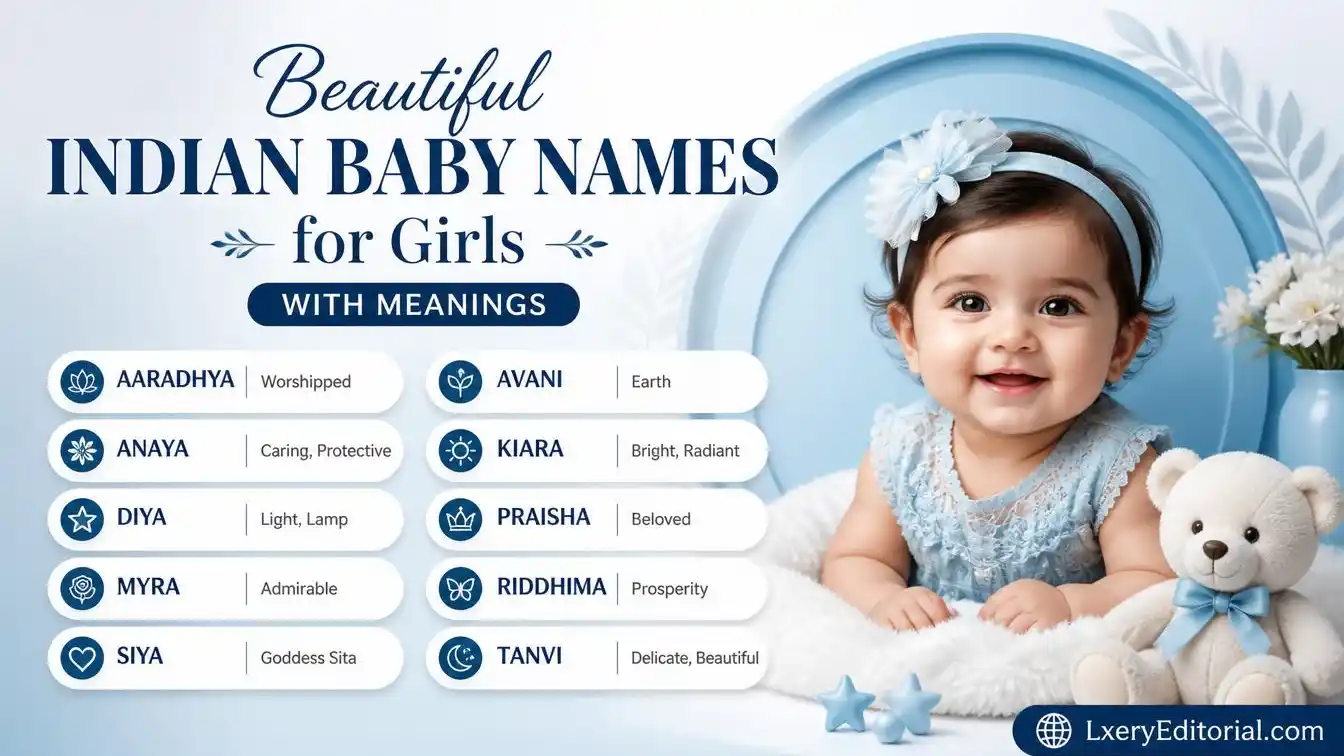
Searching for Indian baby names for girls? This guide brings together beautiful options from timeless Hindu goddess names to fresh modern picks and classic Sanskrit baby girl names. Every name includes a carefully checked meaning, its language of origin, and simple pronunciation help, plus cultural notes and practical tips to help you choose with confidence.
How to Choose the Right Name for Your Daughter

In Indian tradition, a name is more than a label; it is a blessing and an identity your daughter will carry for life. These practical pointers can help you narrow the list:
- Start with meaning. Pick a meaning you would be proud to explain to your daughter one day: light, strength, wisdom, and nature are perennial favorites.
- Say it out loud. Speak the full name first, middle, and family name to check its rhythm and flow.
- Test nicknames and initials. Make sure the shortened form and the initials sit comfortably too.
- Honor your family’s traditions. Many families name daughters after goddesses, saints, or beloved elders as a mark of respect.
- Consider the nakshatra. Some families consult a priest or astrologer and choose the name’s first syllable based on the baby’s birth star. Others simply choose what they love; either approach is perfectly fine.
- Think about pronunciation. If you live abroad, a shorter name like Diya, Ira, or Tara is easy for everyone to say and spell.
- Check spelling variations. Many Indian names have more than one accepted spelling (for example, Aanya/Anya, Saanvi/Sanvi, or Kiara/Kyara). Choose the version that feels right for your family and stays consistent on official documents.
- Consider life outside India. If your daughter will grow up in a different country, shorter names with clear vowel sounds usually travel more easily across languages and classrooms.
Hindu Goddess Names for Girls
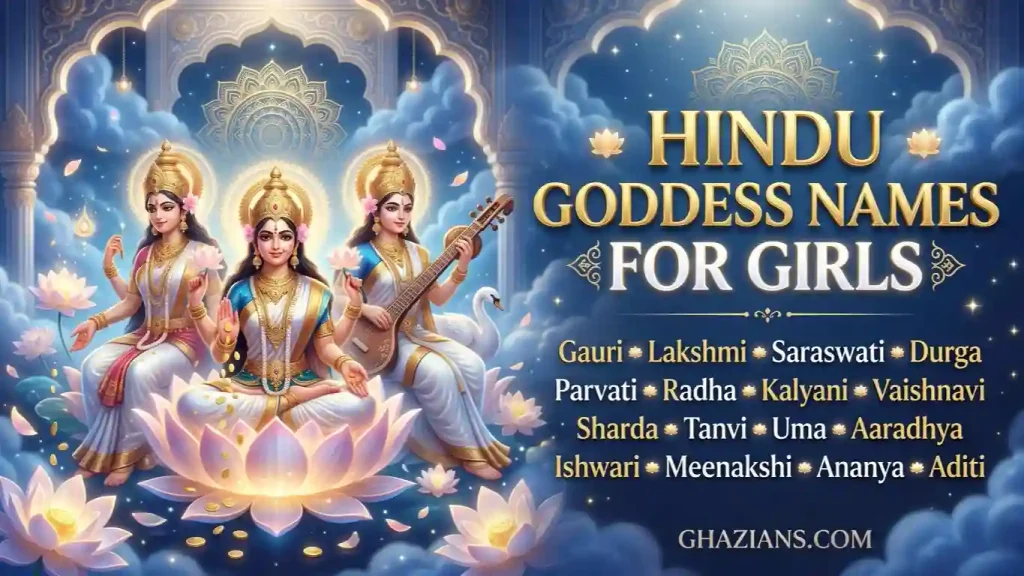
Names of the Devi, the divine feminine, are among the most beloved in India. Parents choose them as blessings, hoping a daughter will carry something of the goddess’s qualities: Durga’s courage, Lakshmi’s grace, Saraswati’s wisdom. These names glow especially bright around festivals such as Navratri, Diwali, and Vasant Panchami, when the goddesses they honor take center stage.
| Name | Meaning | Origin | Pronunciation |
| Aadhya | “First power”; an epithet of the goddess Durga | Sanskrit | AHD-hyah |
| Ambika | “The mother”; an epithet of Parvati/Durga | Sanskrit | um-BEE-kah |
| Annapurna | “Filled with food”; goddess of nourishment, a form of Parvati | Sanskrit | un-nuh-POOR-nah |
| Anvi | “One who follows”; a name of the goddess Lakshmi | Sanskrit | UN-vee |
| Aanya | “Inexhaustible, gracious”; a name of Lakshmi | Sanskrit | AHN-yah |
| Aarna | “Wave”; also a name of Lakshmi | Sanskrit | AHR-nah |
| Bhavani | “Consort of Bhava (Shiva)”; a form of Parvati | Sanskrit | bhuh-VAH-nee |
| Durga | “The invincible”; goddess of strength and protection | Sanskrit | DOOR-gah |
| Gauri | “Fair, radiant”; a gentle form of Parvati | Sanskrit | GOW-ree |
| Hamsika | “Swan”; the swan is goddess Saraswati’s vehicle | Sanskrit | hum-SI-kah |
| Ishani | “Consort of Shiva”; a form of Parvati/Durga | Sanskrit | ee-SHAH-nee |
| Kashvi | “Shining, radiant”; associated with Lakshmi | Sanskrit | KUSH-vee |
| Lakshmi | Goddess of wealth and fortune | Sanskrit | LUK-shmee |
| Meera | “Devotee of Krishna”; after Mirabai, the 16th-century saint-poet | Sanskrit/Hindi | MEE-rah |
| Nitya | “Eternal”; also one of Durga’s names | Sanskrit | NIT-yah |
| Parvati | “Daughter of the mountain”; goddess of power and devotion | Sanskrit | PAHR-vuh-tee |
| Radha | “Success”; the beloved of Krishna | Sanskrit | RAH-dhah |
| Saanvi | A name of the goddess Lakshmi | Sanskrit | SAHN-vee |
| Saraswati | Goddess of knowledge, music, and the arts | Sanskrit | suh-RUS-vuh-tee |
| Shivani | “Wife of Shiva”; a form of Parvati | Sanskrit | shi-VAH-nee |
| Sia | A short form of Sita | Sanskrit | SEE-ah |
| Sita | “Furrow”; consort of Rama, heroine of the Ramayana | Sanskrit | SEE-tah |
| Siya | “Sita”; an affectionate form of Sita’s name | Sanskrit | SEE-yah |
| Tara | “Star”; also one of the Mahavidyas, the wisdom goddesses | Sanskrit | TAH-rah |
| Vamika | An epithet of the goddess Durga | Sanskrit | VAH-mi-kah |
| Anjali | “Offering”; hands joined in reverence | Sanskrit | UN-juh-lee |
Timeless Traditional Names
Rooted in Sanskrit and the scriptures, these names have been cherished for generations. They suit families who want a name with depth and heritage, one that feels at home in a naming ceremony and a modern classroom alike.
| Name | Meaning | Origin | Pronunciation |
| Aditi | “Boundless”; mother of the gods | Sanskrit | uh-DI-tee |
| Aarya | “Noble, honorable” | Sanskrit | AHR-yah |
| Anaya | “Without a superior; caring” (Sanskrit); “God has answered” (Hebrew) | Sanskrit/Hebrew | uh-NAH-yah |
| Dhriti | “Patience, courage, steadiness” | Sanskrit | DRIT-ee |
| Diya | “Light”; an oil lamp | Sanskrit/Hindi | DEE-yah |
| Ira | “Earth”; also a name of Saraswati, goddess of speech | Sanskrit | EE-rah |
| Ishita | “Desired”; also “greatness, mastery” | Sanskrit | ee-SHI-tah |
| Kriti | “Creation, work of art” | Sanskrit | KRIT-ee |
| Medha | “Intelligence, wisdom” | Sanskrit | MAY-dhah |
| Prisha | “Beloved”; also “God’s gift” | Sanskrit | PREE-shah |
| Ridhi | “Prosperity, success” | Sanskrit | RID-dhee |
| Samriddhi | “Prosperity, abundance” | Sanskrit | sum-RID-dhee |
| Shanti | “Peace, tranquility” | Sanskrit | SHAHN-tee |
| Shreya | “Auspicious, excellent”; the highest good | Sanskrit | SHRAY-ah |
| Simran | “Remembrance, meditation”; cherished in Sikh tradition | Sanskrit/Punjabi | sim-RUN |
| Sukriti | “Good deeds, virtue” | Sanskrit | soo-KRIT-ee |
| Usha | “Dawn”; the Vedic goddess of dawn | Sanskrit | OO-shah |
| Veda | “Sacred knowledge, wisdom” | Sanskrit | VAY-dah |
| Vedika | “Altar”; the sacred platform of Vedic ritual | Sanskrit | vay-DI-kah |
| Divya | “Divine, heavenly” | Sanskrit | DIV-yah |
Modern Indian Girl Names
Fresh, stylish, and easy to say, these contemporary favorites blend Indian sounds with global appeal. A note on origins: most come from Sanskrit, but a few well-loved names traveled from farther afield. Kiara comes from Italian (via Chiara, “bright”), and Myra was coined by the 17th-century English poet Fulke Greville. Both are now warmly embraced by Indian families.
| Name | Meaning | Origin | Pronunciation |
| Advika | “Unique, one of a kind” | Sanskrit | ud-VEE-kah |
| Ahana | “First rays of the sun; dawn” | Sanskrit | uh-HAH-nah |
| Ananya | “Without equal, unique” | Sanskrit | uh-NUN-yah |
| Anika | “Grace, brilliance” | Sanskrit | uh-NEE-kah |
| Anu | “Atom”; also “minute, small” | Sanskrit | uh-NOO |
| Aaradhya | “Worshipped, revered” | Sanskrit | ah-RAHD-hyah |
| Aarohi | “Ascending”; the rising notes of a musical scale | Sanskrit | ah-ROH-hee |
| Charvi | “Beautiful” | Sanskrit | CHAHR-vee |
| Dhwani | “Sound, resonance, musical tone” | Sanskrit | dhwuh-NEE |
| Hridya | “Heart”; also “beloved, dear to the heart” | Sanskrit | HRID-yah |
| Isha | “Goddess, female ruler” | Sanskrit | EE-shah |
| Jiya | “Heart, sweetheart” | Hindi | JEE-yah |
| Kavya | “Poetry” | Sanskrit | KAHV-yah |
| Kiara | “Bright, clear”; from Italian Chiara | Italian | kee-AH-rah |
| Lavanya | “Grace, beauty, loveliness” | Sanskrit | luh-VUN-yah |
| Maya | “Illusion”; the divine creative power | Sanskrit | MIGH-yah |
| Myra | Possibly “myrrh” (fragrant resin); coined by poet Fulke Greville | English (literary) | MY-rah |
| Naina | “Eyes” | Hindi/Sanskrit | nigh-NAH |
| Navya | “New, young”; also “worthy of praise” | Sanskrit | NUHV-yah |
| Pari | “Fairy” | Persian | puh-REE |
| Riya | “Singer” | Hindi/Sanskrit | REE-yah |
| Saanika | “Brilliant, radiant”; also “graceful, charming” | Modern Indian (Sanskrit roots) | SAH-ni-kah |
| Suhani | “Pleasant, beautiful” | Hindi | soo-HAH-nee |
Nature-Inspired Names
Drawn from the earth, rivers, and sky, nature-inspired girl names feel calm and grounded. Rivers in particular are revered as goddesses in Hindu tradition. The Kaveri, for instance, is called the “Ganga of the South” and is worshipped across Karnataka and Tamil Nadu. These names often carry a sense of purity, strength, and quiet beauty.
| Name | Meaning | Origin | Pronunciation |
| Avni | “Earth, the world” | Sanskrit | UV-nee |
| Chandrika | “Moonlight, moonbeam” | Sanskrit | chun-DREE-kah |
| Damini | “Lightning” | Sanskrit | DAH-mi-nee |
| Kaveri | The sacred Kaveri river of South India | Tamil/Sanskrit | kah-VAY-ree |
| Mahi | “Earth”; also a river of western India | Sanskrit | MAH-hee |
| Nila | “Blue, sapphire” | Sanskrit | NEE-lah |
| Surabhi | “Fragrant”; also the divine wish-fulfilling cow, Kamadhenu | Sanskrit | soo-RUH-bhee |
| Vanya | “Of the forest”; also “gracious” (Russian, “God is gracious”) | Sanskrit/Russian | VUN-yah |
| Narmada | Named after the sacred Narmada river | Sanskrit | nur-MUH-dah |
| Ganga | Named after the holy river Ganga | Sanskrit | GUN-gah |
| Jalaja | “Born of water”; another name for the goddess Lakshmi | Sanskrit | juh-LUH-jah |
| Prithvi | “Earth” | Sanskrit | PRITH-vee |
Short and Easy Indian Girl Names
Short names with clear sounds are popular with modern parents, especially those living outside India. These names are simple to pronounce, easy to spell, and still carry meaningful Indian roots.
| Name | Meaning | Origin | Pronunciation |
| Diya | “Light”; an oil lamp | Sanskrit/Hindi | DEE-yah |
| Ira | “Earth”; also a name of Saraswati | Sanskrit | EE-rah |
| Tara | “Star” | Sanskrit | TAH-rah |
| Anu | “Atom”; also “minute, small” | Sanskrit | uh-NOO |
| Jiya | “Heart, sweetheart” | Hindi | JEE-yah |
| Nila | “Blue, sapphire” | Sanskrit | NEE-lah |
| Pari | “Fairy” | Persian | puh-REE |
| Riya | “Singer” | Hindi/Sanskrit | REE-yah |
| Sia | A short form of Sita | Sanskrit | SEE-ah |
| Maya | “Illusion”; the divine creative power | Sanskrit | MIGH-yah |
| Isha | “Goddess, female ruler” | Sanskrit | EE-shah |
| Anvi | “One who follows”; a name of Lakshmi | Sanskrit | UN-vee |
Frequently Asked Questions
Which Indian girl names are the most popular right now?
Popularity shifts with region and year, so treat any “top 10” list with caution. Short, melodic names such as Diya, Ira, Tara, Myra, and Kiara are widely heard today, while classics like Aadhya, Saanvi, and Ananya remain enduring favorites. Choose a name you love rather than chasing a trend; trends fade, but your daughter keeps her name.
How can I make sure I’m pronouncing a name correctly?
Use the pronunciation guide beside each name as a starting point, then listen to a native speaker say it. As a rule of thumb, stress the capitalized syllable (for example, uh-DI-tee for Aditi) and give each vowel its full sound.
Do Indian girl names work well outside India?
Many do. Short names with simple vowel sounds such as Diya, Ira, Tara, Kiara, Maya, and Anu are easy for speakers of other languages to pronounce and spell. Longer traditional names like Saraswati or Annapurna are beautiful too; they may just need gentle correcting now and then.
Is it appropriate to name my daughter directly after a goddess?
Yes, it is very common and considered auspicious. Names like Lakshmi, Saraswati, Durga, and Parvati are given precisely as blessings. Some families prefer a softer epithet, such as Gauri for Parvati or Vamika for Durga, if the full goddess name feels weighty for everyday use.
What if my family wants a nakshatra-based name?
In the namakarana tradition, some families choose the name’s first syllable according to the baby’s birth star (nakshatra). If this matters to your family, shortlist the starting letters you like from this guide and confirm the syllable with your family priest or astrologer.
Should I worry about different spellings of the same name?
Many Indian names have more than one accepted spelling. Decide early on the version you prefer and use it consistently on all official documents to avoid confusion later.
A Final Thought
A name is the first gift you give your daughter, and in the Indian tradition, it is also a quiet blessing spoken over her every day. Take your time, say your favorites aloud, and trust the one that feels like her. Whichever you choose, you will be giving her a name with roots, music, and meaning.
Meanings in this guide were checked against Sanskrit dictionaries and established name references, including WisdomLib, Behind the Name, and standard baby-name dictionaries; cultural notes follow widely documented Hindu tradition.

Mustansar Abbas is a writer and author of the article “Ghazians.com” He is passionate about creating meaningful and engaging content that connects with readers through clear ideas and thoughtful expression.