The best clothing brand names are easy to remember, fit your fashion style, and give customers a reason to recognize your business. Whether you are starting a luxury label, a streetwear brand, an online boutique, or a Pakistani clothing business, the right name can help you build a clear brand identity.
This guide shares 60 clothing brand name ideas across six categories, along with practical naming tips, a shortlist of standout ideas, and a checklist for researching a name before investing in your business.
Important: These are creative suggestions, not verified available business names. A name appearing in this list does not mean it is unused, legally available, or eligible for trademark registration. Always research your preferred name before using it commercially.
How to Choose a Clothing Brand Name
A strong name should fit your products, appeal to your target customers, and remain useful as your business grows. Use these seven principles to narrow down your choices.
1. Make It Easy to Say and Spell
Customers may hear your name in a conversation, see it on a label, or search for it on social media. Choose words people can pronounce and spell without repeatedly asking for clarification.
Try this: Tell someone your favorite name without showing it to them. Ask them to spell it. If they struggle, consider a simpler option.
2. Keep It Short and Memorable
One to three words are often easier to fit on clothing labels, shopping bags, packaging, and social media profiles. A longer name can still work, but it should be easy to remember and visually clear.
3. Match the Name to Your Fashion Style
A name for a premium designer label may not suit a playful streetwear business. Think about your products and the feeling you want customers to associate with them.
For example, Ivory & Ink suggests understated elegance, while Concrete Poets suggests creative urban fashion. These are branding impressions, not guarantees of how customers will respond.
4. Understand the Name’s Meaning
A name with a meaningful story can help communicate your brand’s identity. Urdu-inspired words, fabric references, and nature-inspired names may be suitable for particular fashion styles.
Before choosing a word from another language, verify its spelling, pronunciation, meaning, and cultural context with a reliable dictionary or fluent speaker. Avoid building your brand story around an unverified translation.
5. Look for Distinctiveness
A name should help customers distinguish your business from other clothing brands. Names that are merely descriptive may be difficult to protect as trademarks, while suggestive or coined names can sometimes offer stronger possibilities.
However, a creative-sounding name is not automatically available or legally protectable. Existing trademarks, similar business names, the products involved, and the relevant jurisdiction all matter.
6. Choose a Name That Can Grow With Your Business
Think beyond your first collection. If you start with women’s clothing, might you later sell accessories, menswear, or footwear?
A name that is too narrow can limit your future options. Choose one that fits your current products while leaving room for realistic expansion.
7. Test Your Favorites Before Deciding
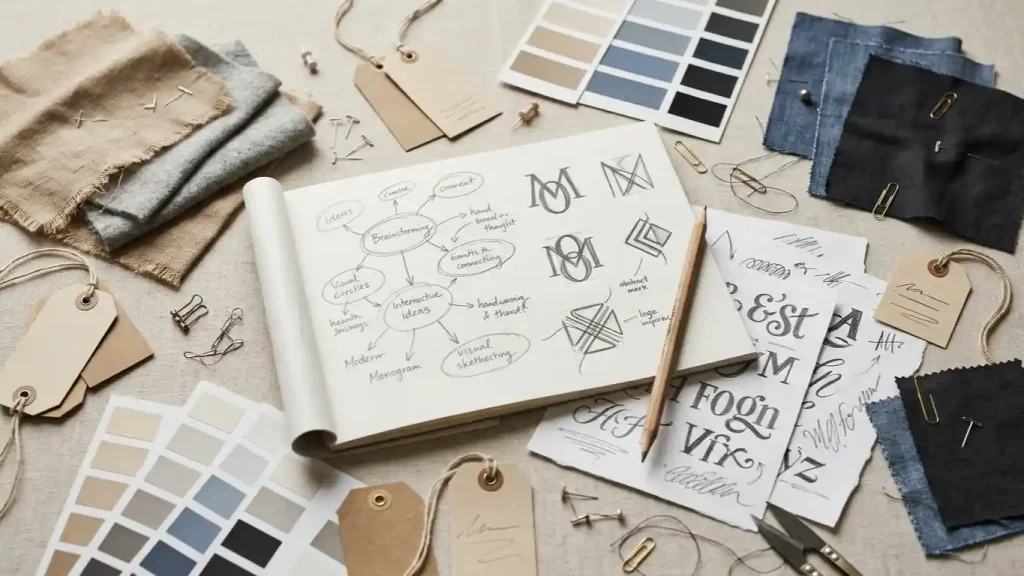
Create a shortlist of 10–15 names. Say them aloud, write them in different styles, and ask potential customers what each one makes them think of.
Then research your strongest options. Do not choose a name simply because it looks attractive in a logo mockup.
10 Clothing Brand Names to Consider First
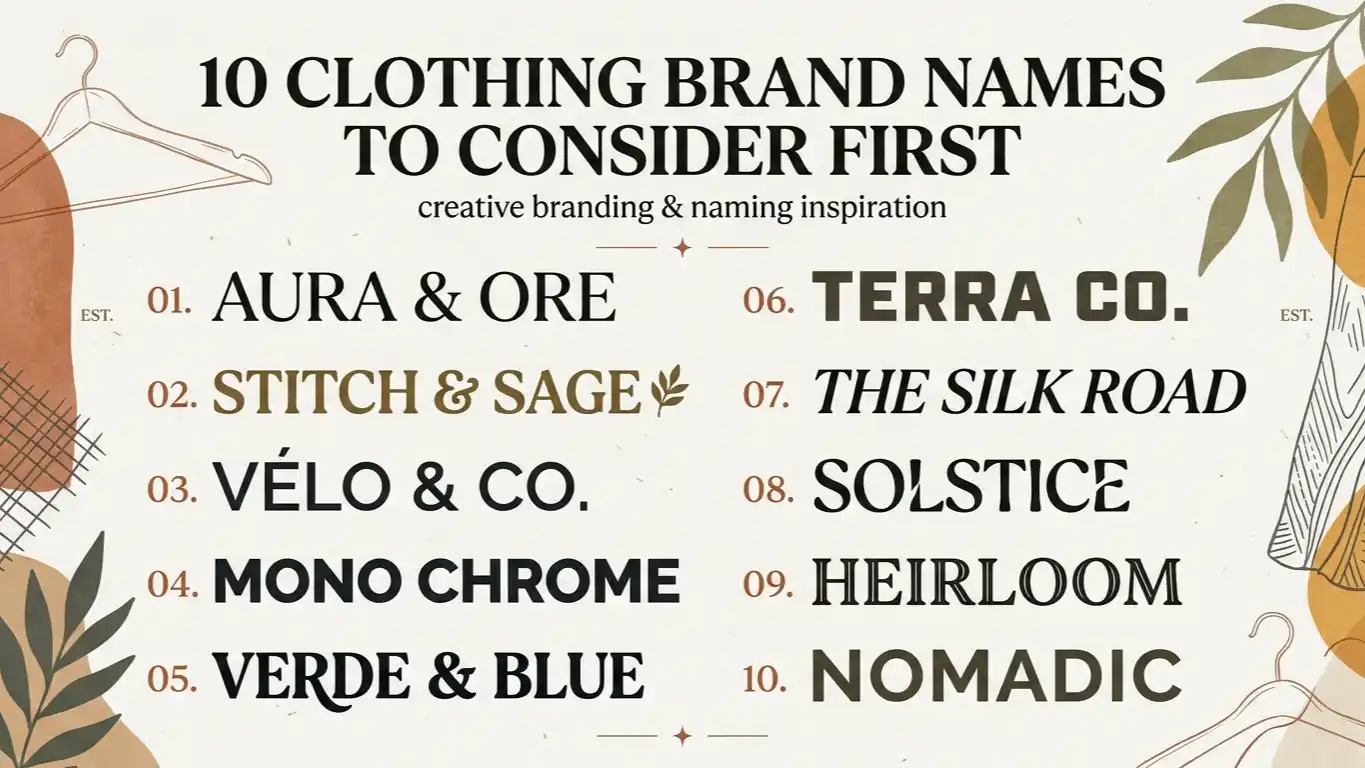
These ten ideas are a starting point for different fashion styles. The descriptions explain their creative appeal; they are not claims that the names are unique or available.
| Name idea | Why it may work | Potential fit |
| Threadmark | Suggests that stitching and design are a signature | General clothing |
| Rangrez | Evokes traditional fabric-dyeing and craft | Cultural and festive fashion |
| Maison Lueur | Creates a refined, editorial impression | Premium fashion concept |
| Still Studio | Feels calm, simple, and modern | Minimalist clothing |
| Concrete Poets | Combines urban toughness with creativity | Streetwear |
| Libas & Co. | Uses a familiar clothing-related Urdu word | Pakistani fashion |
| Everline | Suggests lasting style and continuity | Everyday essentials |
| Petal & Form | Combines a soft, natural image with design | Women’s fashion |
| Serein Atelier | Has a poetic, boutique-style sound | Conceptual luxury label |
| Loudthread | Sounds energetic and expressive | Youth and graphic streetwear |
Our suggestion: Start with the names that fit your products and customers best, rather than automatically choosing the name that sounds most luxurious. Research every finalist before committing to it.
60 Clothing Brand Name Ideas
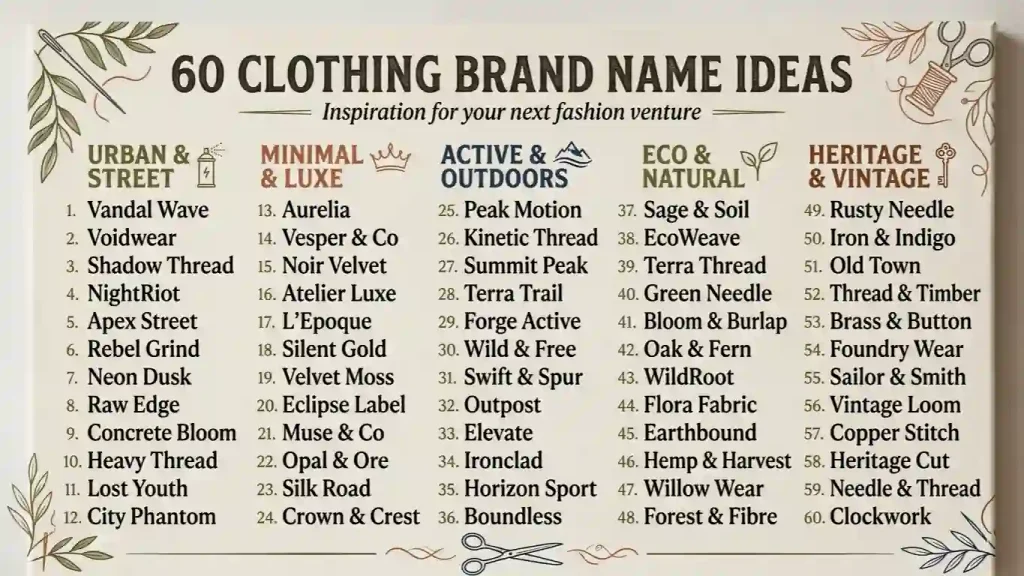
The following names are grouped by style to make your search easier. Use them as brainstorming ideas and adapt them to your brand personality. None has been verified as available for commercial use.
1. Timeless Clothing Brand Names
These ideas aim for a versatile identity that could suit everyday clothing, casual collections, or a growing fashion label.
| Name idea | What it suggests | Potential fit |
| Threadmark | Stitching as a signature | General clothing |
| Everline | A lasting, consistent style | Everyday essentials |
| Woven & Worn | Comfort and fabric craftsmanship | Casual fashion |
| The Cloth House | A welcoming, established feel | Clothing boutique |
| Forma | Shape, silhouette, and design | Contemporary clothing |
| Loom & Co. | Fabric-making and craft | Heritage-inspired fashion |
| Trueweave | An emphasis on fabric and construction | Quality-focused apparel |
| Modestitch | A blend of modest style and stitching | Modest everyday wear |
| Cloth & Crown | Clothing with an elevated feel | Occasion and festive wear |
| Wearline | A straightforward, modern clothing identity | Online clothing store |
Naming tip: Versatile names work best when your logo, product quality, photography, and customer experience all communicate the same identity.
2. Luxury Clothing Brand Names
These names are intended to evoke refinement, careful design, or a premium aesthetic. A luxurious-sounding name alone does not make a brand luxurious; the products and customer experience must support that impression.
| Name idea | What it suggests | Potential fit |
| Maison Lueur | A refined, editorial mood | Premium fashion concept |
| Velours Noir | A dark, velvet-inspired aesthetic | Eveningwear |
| Aurelia House | Warmth and a golden visual theme | Premium womenswear |
| The Gilded Seam | Attention to finishing and detail | Designer tailoring |
| Opaline | An opal-inspired, luminous mood | Occasionwear |
| Serein Atelier | A poetic, understated identity | Minimalist fashion |
| Ivory & Ink | A contrast of light and dark | Modern luxury basics |
| Celeste Label | A soft, celestial impression | Boutique clothing |
| Élan Studio | Energy and movement | Designer-inspired apparel |
| Velluto | A velvet-inspired name concept | Premium clothing |
Before using a foreign-language name: Check the exact spelling and meaning rather than relying on how sophisticated the word sounds. For instance, Maison Lueur is intended here as a French-inspired name concept, not a verified literal translation of a complete brand phrase.
3. Streetwear Brand Names
Streetwear names often benefit from strong imagery, a clear attitude, and lettering that works on T-shirts, hoodies, caps, and labels.
| Name idea | What it suggests | Potential fit |
| Concrete Poets | Urban life and creative expression | Graphic streetwear |
| Offbeat Supply | Independent style | Alternative fashion |
| Static Youth | Energy and movement | Youth streetwear |
| Block & Bold | Confidence and neighborhood culture | Urban clothing |
| Nightshift Club | Late-night city culture | Dark streetwear |
| Rawhem | An unfinished, raw-edge look | Edgy casualwear |
| Zero Uniform | Individuality over conformity | Experimental fashion |
| Asphalt Rose | A contrast between toughness and softness | Statement streetwear |
| Loudthread | Expressive, attention-grabbing style | Graphic apparel |
| Dayone District | Loyalty and community | Community-led fashion |
Naming tip: Picture the name printed in large letters on a hoodie. If it is difficult to read, awkward to pronounce, or too complicated to remember, try another option.
4. Minimalist and Classy Clothing Brand Names
Minimalist names can suit neutral colors, clean silhouettes, capsule wardrobes, and simple everyday pieces.
| Name idea | What it suggests | Potential fit |
| Quiet Form | Calm design and clean shapes | Minimalist fashion |
| Plain Cloth | Honest, uncomplicated basics | Everyday essentials |
| Lineform | Structure and silhouette | Tailored clothing |
| The Neutral | A restrained color palette | Modern basics |
| Quiet Cut | Understated tailoring | Premium essentials |
| Essential Thread | Practical wardrobe staples | Basics collections |
| Mono Wear | A simple, single-color aesthetic | Minimalist apparel |
| Bareloom | A focus on fabric and simplicity | Simple everyday clothing |
| Soft Standard | Comfort as a central feature | Loungewear and basics |
| Less Label | A deliberately understated identity | Contemporary minimal fashion |
Naming tip: A simple name can be effective, but common words may also be used by many other businesses. Research similar names carefully before settling on one.
5. Pakistani and Urdu-Inspired Clothing Brand Names
Urdu-inspired names may suit businesses selling shalwar kameez, kurtas, lawn suits, festive clothing, modest wear, or contemporary South Asian fashion.
| Name idea | Intended association | Potential fit |
| Noor Collective | Noor is commonly used for light or radiance | Modest and contemporary wear |
| Libas & Co. | Libas means clothing or attire | Online clothing stores |
| Rangrez | Associated with a traditional fabric dyer | Ethnic and festive fashion |
| Resham House | Resham means silk | Formal and bridal wear |
| Zariya Studio | A name concept inspired by zariya, meaning a means or way | Contemporary Pakistani fashion |
| Sitara Line | Sitara means star | Festive collections |
| Hunar Label | Hunar means skill or talent | Artisan-inspired fashion |
| Virsa | Associated with heritage or legacy | Traditional clothing |
| Tehzeeb | Associated with culture, manners, and refinement | Traditional and premium-style wear |
| Chandni & Co. | Chandni means moonlight | Women’s everyday fashion |
Important language note: The descriptions above are intended as naming guidance, not certified dictionary entries. Confirm the exact meaning, spelling, pronunciation, and cultural associations with a reliable Urdu reference or fluent speaker before using a word in your commercial brand.
If your customers read Urdu, consider testing a bilingual identity: a Roman-script name for online discovery and an Urdu-script version for labels or packaging. Make sure both versions are consistent and legible.
6. Women’s Clothing Brand Names
These ideas aim to suit boutiques, dresses, casual collections, occasionwear, and contemporary womenswear.
| Name idea | What it suggests | Potential fit |
| Bloom & Thread | Floral imagery and craftsmanship | Boutique fashion |
| Her Atelier | A personal, design-led identity | Dresses and tailoring |
| Petal & Form | Softness balanced with structure | Women’s everyday wear |
| The Blush Rail | A boutique-style shopping experience | Trend-led boutiques |
| Pearl & Hem | Classic elegance and garment detail | Formal womenswear |
| Luna Loom | A dreamy, fabric-focused identity | Casual and eveningwear |
| Femme Form | Shape and confident femininity | Contemporary womenswear |
| Wildflower Wardrobe | Natural, relaxed style | Boho and casual fashion |
| Sage & Silk | A calm palette and refined fabric imagery | Understated elegance |
| The Everyday Muse | Inspiration for daily outfits | Versatile women’s fashion |
Naming tip: Choose a name that matches the women you want to serve. A boutique for formal occasionwear may need a different identity from a brand focused on affordable everyday basics.
How to Check if a Clothing Brand Name Is Available
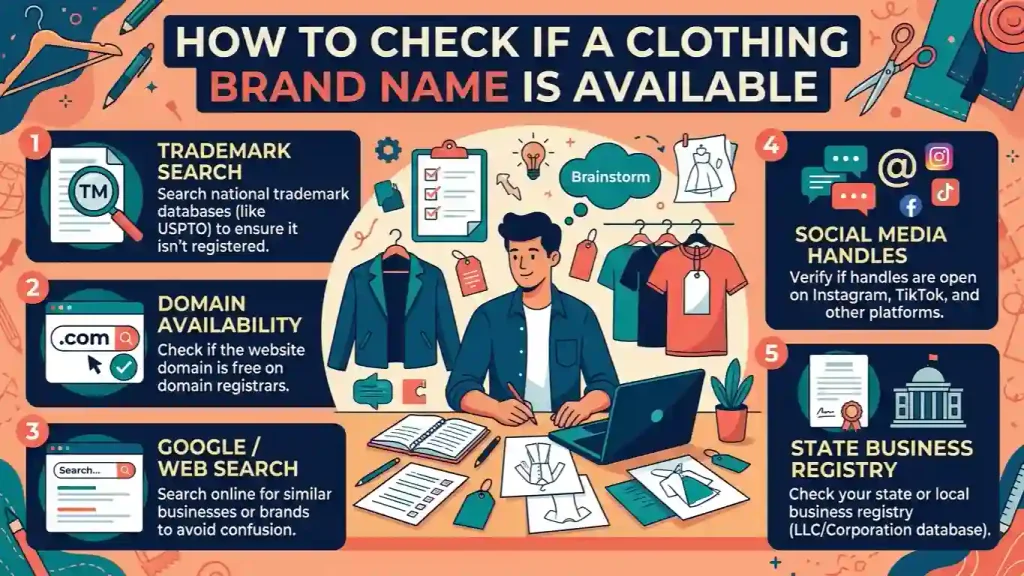
Finding an appealing name is only the first step. Before spending money on labels, packaging, inventory, or advertising, conduct preliminary research.
1. Search Official Trademark Records
Search for the exact name and similar names in the countries where you plan to sell. A name can be used in one market while a similar mark creates a problem in another.
Useful starting points include:
- United States: USPTO Trademark Search
- International research: WIPO Global Brand Database
- Pakistan: Intellectual Property Organization of Pakistan
WIPO advises users to consult relevant national or regional registers as well as its global database. A search result that shows no obvious match does not, by itself, establish that a name is legally available.
For serious commercial use, consider consulting a qualified trademark professional in your target market.
2. Search Google and Other Search Engines
Search the name in quotation marks and try variations related to your products.
For example, if you are considering Threadmark, search:
- “Threadmark”
- “Threadmark clothing”
- “Threadmark fashion”
- “Threadmark apparel”
- Threadmark clothing brand
Check whether the results show an existing clothing business, designer, retailer, or a similar name. This is an initial screening step, not legal clearance.
3. Check Domain Names
Search whether a suitable domain is available through a domain registrar. A .com address can be useful for an international audience, but other extensions may also suit your business.
Remember: Owning a domain does not automatically give you trademark rights. A domain being available also does not prove that the name is legally safe to use.
4. Check Social Media Handles
Look for the name on Instagram, TikTok, Facebook, Pinterest, and any other platform important to your customers.
A consistent username can make your brand easier to find. If the exact handle is unavailable, investigate why before deciding whether a variation is appropriate.
5. Check Business Registrations and Similar Brands
Search business directories and relevant company registries in your target market. Look for names that sound similar, not just exact matches.
Two businesses may have similar names but different legal situations, so do not rely on a quick search alone.
6. Ask for Feedback
Show your final three to five names to people who resemble your target customers. Ask:
- Which name is easiest to remember?
- Which name best fits the products?
- How would you spell it after hearing it once?
- What type of clothing would you expect this brand to sell?
- Does any name remind you of an existing business?
Record their answers without telling them which name you prefer. Their first impressions may reveal confusion you had not noticed.
Clothing Brand Naming Mistakes to Avoid
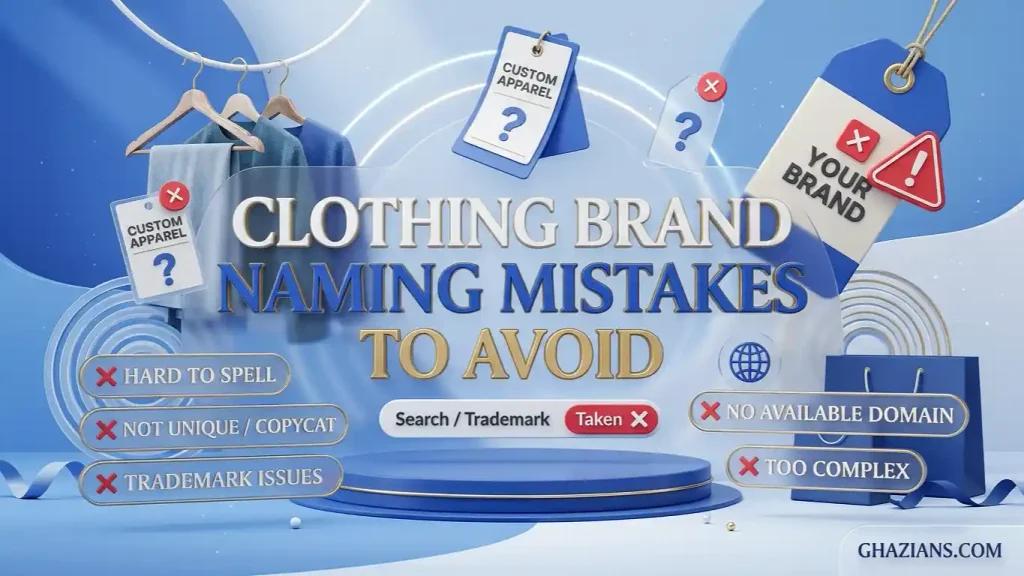
Choosing a Name Only Because It Sounds Luxurious
Words such as Maison, Couture, and Atelier can create a refined impression, but they cannot replace quality products, reliable service, and thoughtful design. Choose language that matches what your business actually offers.
Using a Name That Is Too Descriptive
A phrase such as “Quality Cotton Shirts” describes a product but may do little to distinguish your business. A more distinctive name can give you greater room to develop a recognizable identity, although trademark protection always depends on the relevant facts and law.
Selecting a Name That Is Hard to Spell
Unusual spellings may look distinctive on a logo but make word-of-mouth recommendations and online searches more difficult. Test pronunciation and spelling before you decide.
Following a Short-Lived Trend
Slang, memes, and viral phrases can become dated quickly. Ask whether the name will still fit if your products or target audience change in a few years.
Skipping Availability Research
Do not order labels or launch advertising simply because a domain or social handle is available. Check trademarks, similar businesses, domain options, and cultural meanings first.
Choosing Before Defining Your Brand
Write down your target customer, price range, product category, and desired brand personality. A name that suits an affordable streetwear label may not suit a formalwear boutique.
Frequently Asked Questions
What makes a good clothing brand name?
A good clothing brand name is memorable, easy to pronounce, suitable for the products, and distinct enough to help customers recognize the business. It should also work on labels, packaging, websites, and social media. Before using it, research similar businesses and relevant trademark records.
Should I use my own name for my clothing brand?
A personal name can work well for a designer-led label, especially when the founder’s creative identity is central to the business. A separate brand name may provide more flexibility if you later expand, bring in partners, or sell the company. Consider your long-term plans before deciding.
How do I know if a clothing brand name is already taken?
Search official trademark records in your target markets, search the web for identical and similar names, check business registries, and review domain and social media availability. These steps help identify potential conflicts, but they do not replace a proper legal assessment.
Is a .com domain necessary for a clothing brand?
No. A .com domain can be useful, especially for an international audience, but other domain extensions may also work. Choose a domain that customers can remember and that fits your brand. Check legal and trademark issues separately because domain availability does not establish trademark availability.
Can I use an Urdu name for a luxury clothing brand?
Yes, an Urdu-inspired name can suit a premium or contemporary clothing business. Words such as Noor, Resham, and Tehzeeb have cultural associations that may fit particular brand identities. Verify the meaning and context, test pronunciation with your intended customers, and check for existing business or trademark conflicts.
How many clothing brand names should I shortlist?
Start with around 10–15 ideas, then narrow the list by checking style fit, pronunciation, spelling, meaning, online presence, and trademarks. Keep two or three strong finalists while you conduct more detailed research.
Can I use one of the names in this article for my business?
You can use this list to brainstorm, but do not assume any name is available simply because it appears here. Research the name in your target market and seek professional advice if you plan to invest substantially in the brand.
Conclusion
The best clothing brand name is not necessarily the fanciest or most unusual one. It is the name that fits your products, makes sense to your customers, and can support the identity you want to build.
Use these 60 clothing brand names as a starting point. Shortlist the strongest options, test how they sound, verify any foreign-language meanings, and research existing businesses and trademarks before making a final decision.
A thoughtful name can help your clothing business stand out, but your products, customer experience, and consistent branding are what give that name meaning over time.

Mustansar Abbas is a writer and author of the article “Ghazians.com” He is passionate about creating meaningful and engaging content that connects with readers through clear ideas and thoughtful expression.